






Regional Gender Justice Program 2025


Asia and Pacific Alliance of YMCAs
Regional Gender Justice Program 2025
Communique
“Climate Justice is Gender Justice”
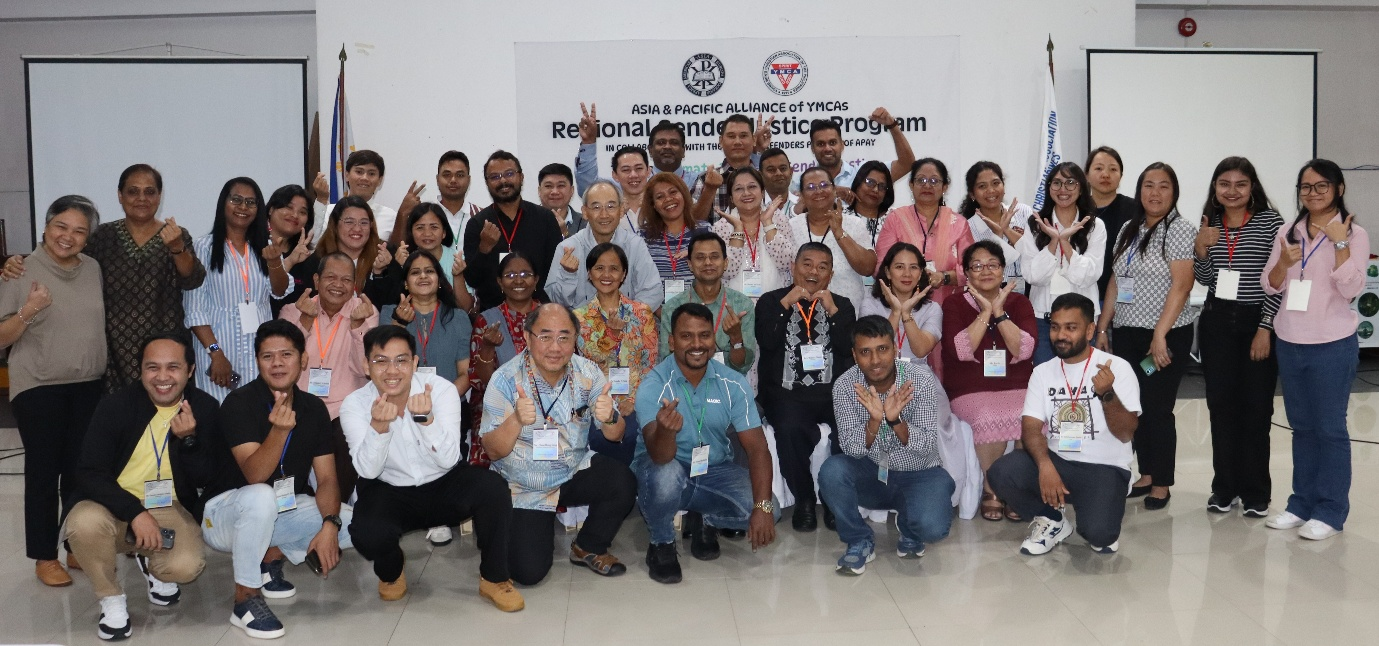
The Regional Gender Justice Program 2025, in collaboration with the Climate Defenders Project convened from September 20-24, 2025, as a significant initiative of the Asia and Pacific Alliance of YMCAs (APAY). The program was hosted by the YMCA of the Philippines at the YMCA of Manila Hostel. Forty-one (41) participants (including four staff members) from 11 countries across Asia gathered to address the critical intersection of gender justice and climate action. The countries present were: Bangladesh, Hong Kong, India, Indonesia, Korea, Mongolia, Myanmar, Pakistan, Philippines, Sri Lanka, and Timor-Leste.
The program commenced with worship emphasizing that all humanity—male and female—are created equally in God's image with shared responsibility for caring for creation. The program featured comprehensive sessions including “Unboxing Gender: Breaking Rules We Never Wrote & Moving Beyond the Binary,” exposure visits to communities addressing climate-gender intersections, panel discussions on climate-resilient futures, and a virtual session with the World Council of Churches (WCC) on climate litigation.
The WCC session highlighted faith-based advocacy in climate justice, demonstrating how churches mobilize for climate action through moral leadership, prioritize climate education for children from early ages, and support legal efforts that hold governments and corporations accountable for environmental harm affecting vulnerable communities, particularly women and marginalized groups.
Affirmations and Key Recognitions
We reaffirm our commitment to:
● YMCA Challenge 21's mission to “empower all, especially young people and women, to take increased responsibilities, assume leadership at all levels, and work towards an equitable society”
● The inseparable connection between environmental sustainability and gender equality, recognizing climate change disproportionately affects women, girls, and gender-diverse individuals
● Christian values of equality, justice, equity, and peace as foundational to our climate and gender response
● The principle that without gender justice, climate justice cannot be achieved
We acknowledge that:
● Climate change amplifies existing gender inequalities and poses unique threats to women and gender-diverse individuals
● Women and gender-diverse communities lead innovative climate solutions and must be recognized as essential partners
● The YMCA movement has a responsibility to address climate justice through a comprehensive gender lens
Recommendations
For APAY Leadership and Governance:
● Strengthen the Gender Justice and Climate Action thrust in APAY's Gender Equity Committee priorities
● Include Gender Justice Program as a regular feature of future APAY General Assemblies
● Develop comprehensive gender-climate policies that guide all APAY climate initiatives
● Ensure balanced representation of women, men, youth, and gender-diverse members in climate decision-making bodies
● Allocate dedicated funding for gender-responsive climate programs
For National Movements:
● Integrate gender analysis into all climate programs and disaster response initiatives
● Develop partnerships with women-led climate organizations and environmental justice groups
● Implement gender-responsive climate education programs that amplify women's leadership
● Support women's economic empowerment through climate-resilient livelihood programs
For Local YMCAs:
● Become Climate Defenders by achieving carbon neutrality with gender-inclusive approaches
● Create mentorship programs supporting women and gender-diverse individuals in environmental leadership
● Develop community climate resilience programs prioritizing women and marginalized genders
● Advocate for gender-responsive climate policies at local and national levels
For Faith-Based Advocacy and Legal Action:
● Strengthen partnerships with ecumenical bodies like the World Council of Churches to mobilize moral leadership for climate action
● Support strategic climate litigation efforts that hold governments and corporations accountable for environmental harm
● Integrate climate education from early childhood, teaching children about caring for creation as spiritual responsibility
● Advocate for legal frameworks recognizing climate change as a gender justice issue
Commitments to Action
We commit to:
● Implementing concrete gender-responsive climate action plans within the next 12 months
● Supporting the “16 Days of Activism” campaign highlighting climate-gender intersections
● Establishing partnerships with local women's organizations and climate justice movements
● Advocating for gender-inclusive climate policies in our communities
● Measuring and reporting progress on both gender equity and climate action
Vision for 2030
By 2030, we envision an Asia Pacific YMCA movement where:
● All YMCAs are committed to carbon neutrality by 2030, operating as Climate Defenders through the implementation of diverse programs and initiatives as outlined in APAY's Quadrennial Program Plan (QPP) under Sustainable Planet pillar
● Women and gender-diverse individuals hold equal leadership in climate decision-making at all levels–from local YMCAs to national movements and regional governance
● Gender-responsive climate programs are standard practice across National Movements, integrating gender analysis into all climate initiatives and disaster response
● Young people, especially young women and marginalized youth, are empowered as climate leaders and change agents, actively participating in climate action and decision-making
● The YMCA contributes to building vibrant civil societies that are resilient and empowered to address social inequalities, working toward achieving SDG 5 (Gender Equality) and SDGs 13 (Climate Action) as part of the broader UN Agenda 2030 for Sustainable Development Goals.
Call to Action
Climate justice is gender justice. We cannot address the climate crisis without addressing gender inequality, nor achieve gender justice without confronting the climate emergency.
As we return to our communities, we carry the responsibility to ensure climate responses are equitable, participatory, and empowering for all genders. The time for action is now. Together, we will build a more just, resilient, and sustainable future for all.
Issued by the participants of APAY Regional Gender Justice Program 2025
Manila, Philippines
September 24, 2025