




International Women’s Day Webinar
Last Updated (Wednesday, 18 March 2026 00:58)
International Women’s Day Webinar
Organized by the Gender Equity Committee of the Asia Pacific Alliance of YMCAs (APAY)
Date: 9 March 2026
Theme: Rights, Justice, and Action: An Interfaith Call for All Women and Girls
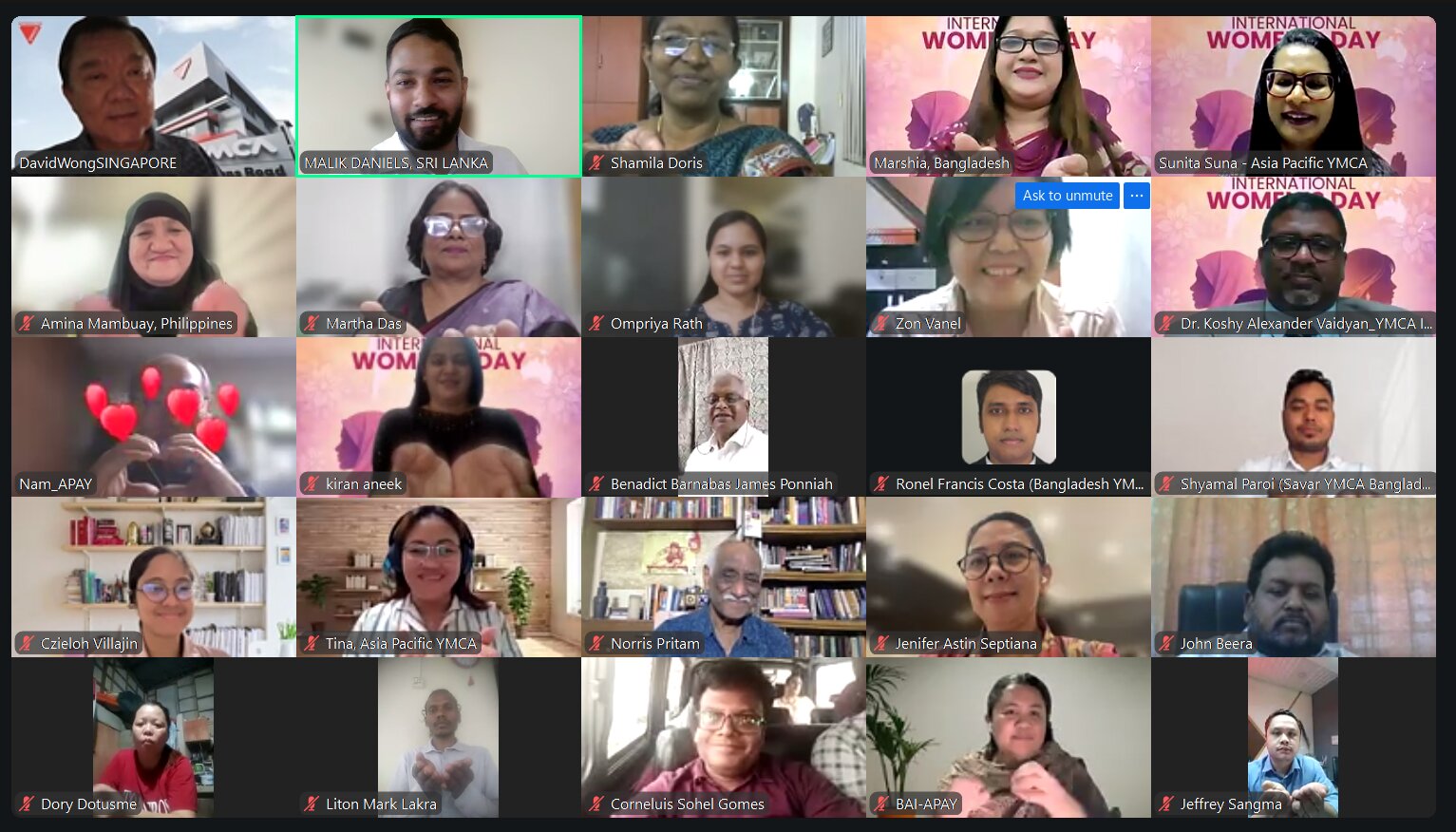
The Gender Equity Committee of the Asia Pacific Alliance of YMCAs (APAY) organized an International Women’s Day webinar on 9 March 2026, themed “Rights, Justice, and Action: An Interfaith Call for All Women and Girls.”
The webinar featured an interfaith panel of women leaders representing Christian, Hindu, Muslim, and Buddhist traditions. The webinar also featured inspiring messages from Very Rev. Philip Thomas, President of APAY, Mr. Nam Boo Won, General Secretary of APAY, and Ms. Marshia Mili Gomes, Chair of the Gender Equity Committee.
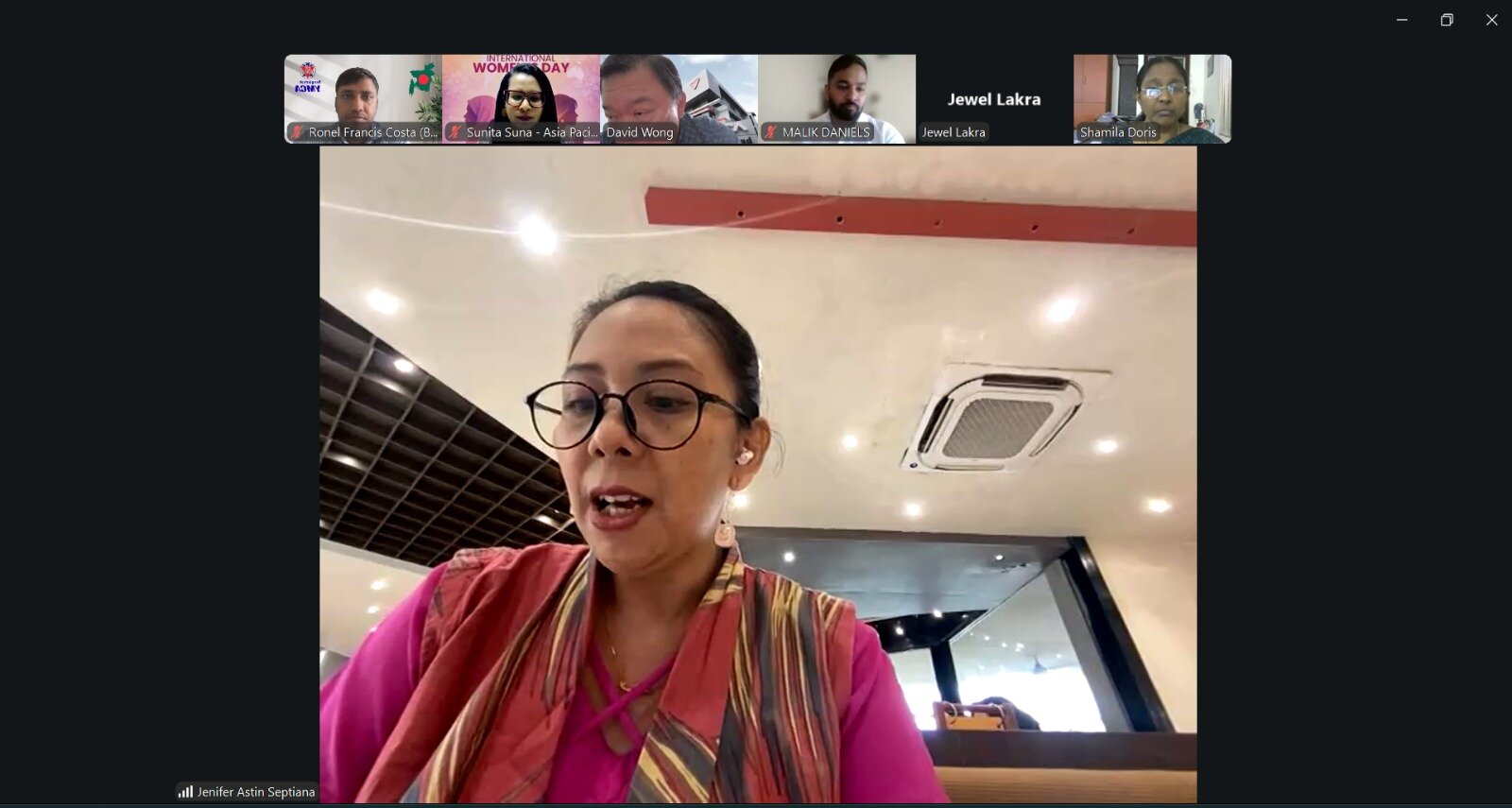
The event attracted 104 participants, demonstrating strong regional engagement and a shared commitment to advancing gender justice across faith communities. Rev. Jenifer Astin played the role of MC of the webinar, while Mr. Malik Daniels as technical assistant - members of the gender equity committee.
Advancing and Empowering Women’s Rights Globally
Ms. Marshia Mili Gomes, Chair of the gender equity committee, welcomed the webinar participants and urged participants to move beyond celebration toward concrete action, introducing
the “Give to Gain” campaign, which promotes investment in women’s rights and opportunities. She emphasized that empowering women strengthens entire communities and called for collective efforts to advance gender equality across faiths and cultures.
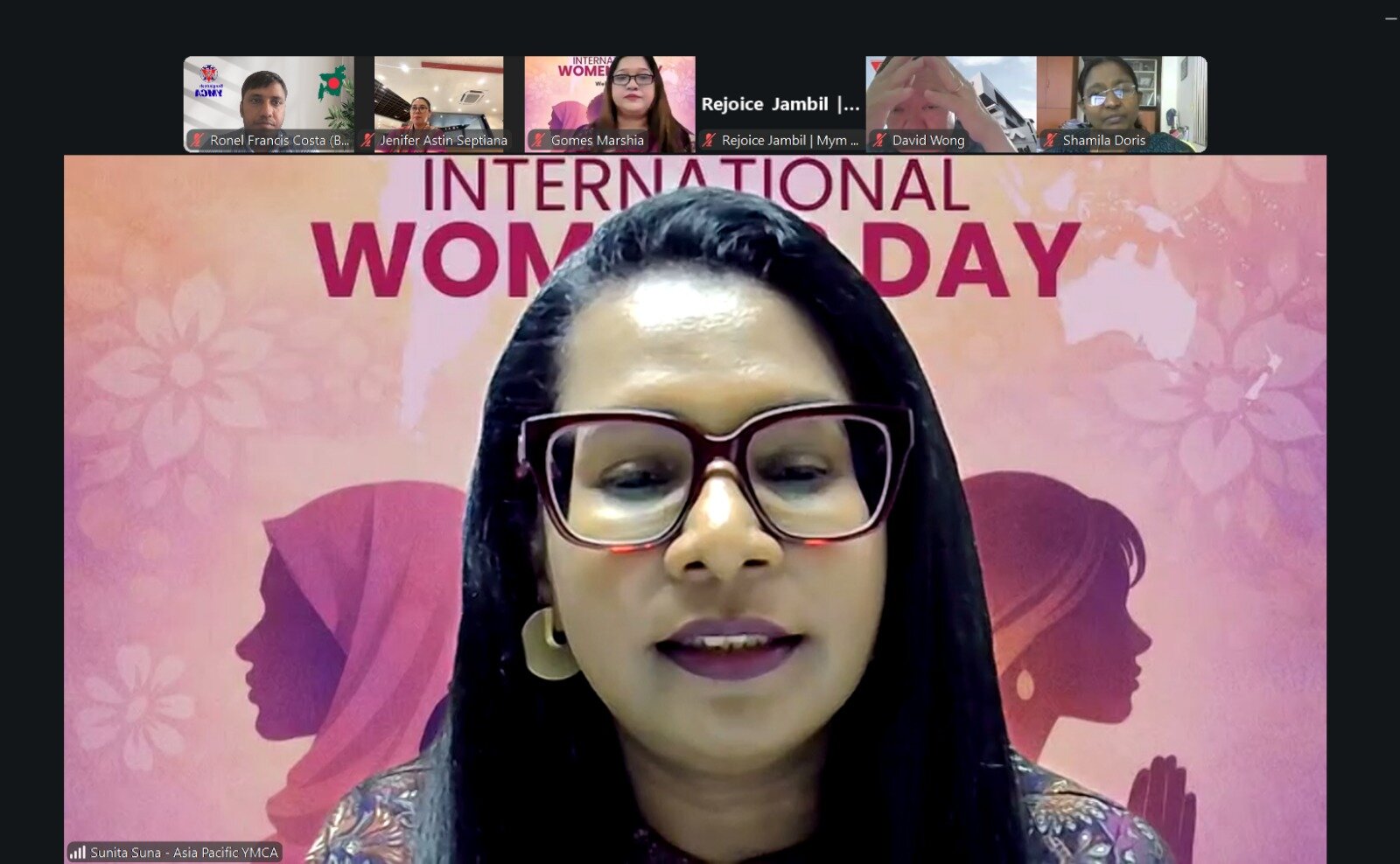
Ms. Sunita Suna, Executive Secretary of APAY, opened the International Women’s Day webinar, themed Rights, Justice, and Action. She underscored the critical need to invest in women’s education, empowerment, and leadership, highlighting their role as cornerstones for building stronger, fairer, and more just communities.
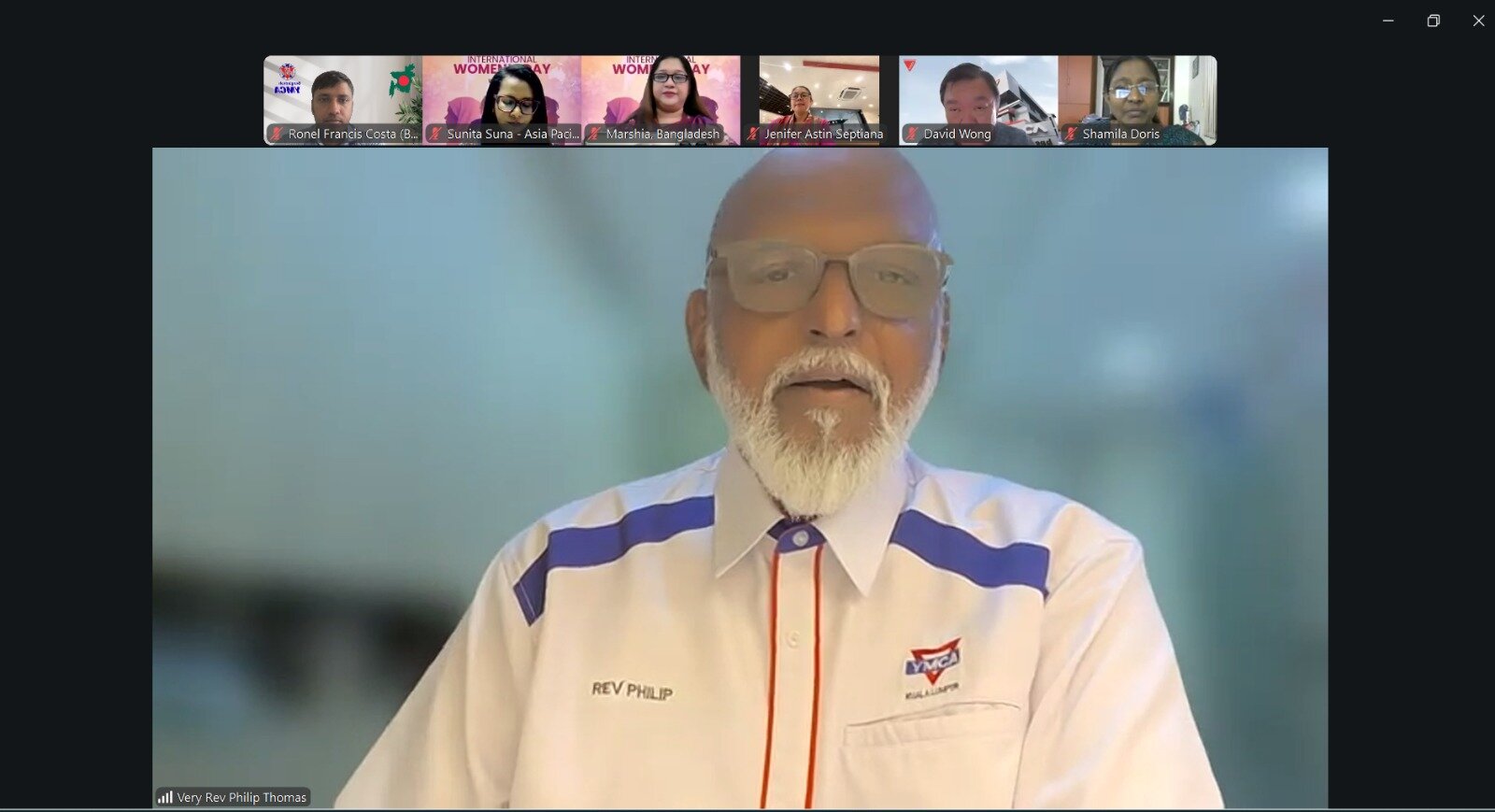
Very Rev. Philip Thomas, President of APAY, delivered a message highlighting the need to redefine concepts of rights, justice, and action in the current global context, particularly in light of technological changes. He commended the Gender Justice Committee for their interfaith approach to promoting dignity and justice for women and girls.
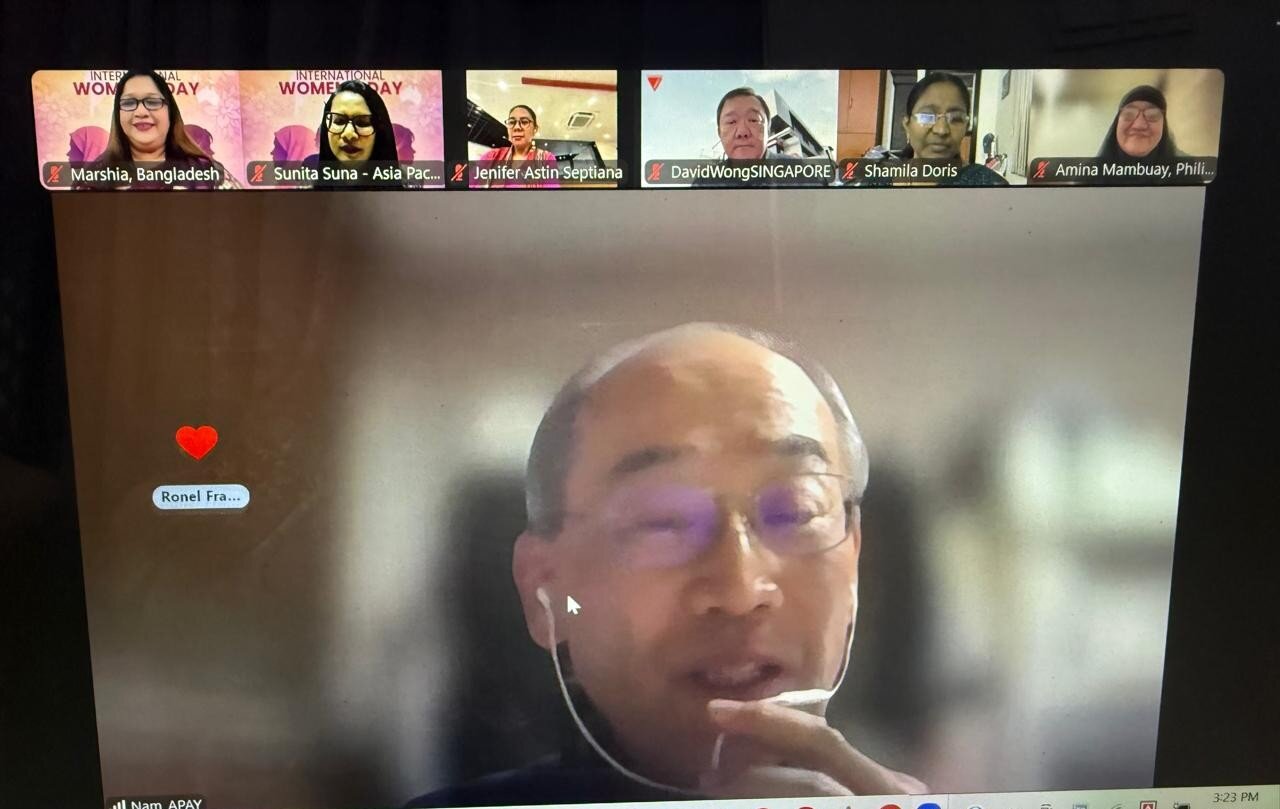
Mr. Nam Boo Won, General Secretary of APAY, referenced the "Bread and Roses" song to emphasize the ongoing struggle for gender equity and the importance of addressing economic disparities while ensuring women's dignity. He called for peacebuilding and encouraged women to lead efforts in transforming societies into more harmonious ones, expressing gratitude to the resource persons for upcoming discussions on gender justice.
Interfaith Panel Discussion
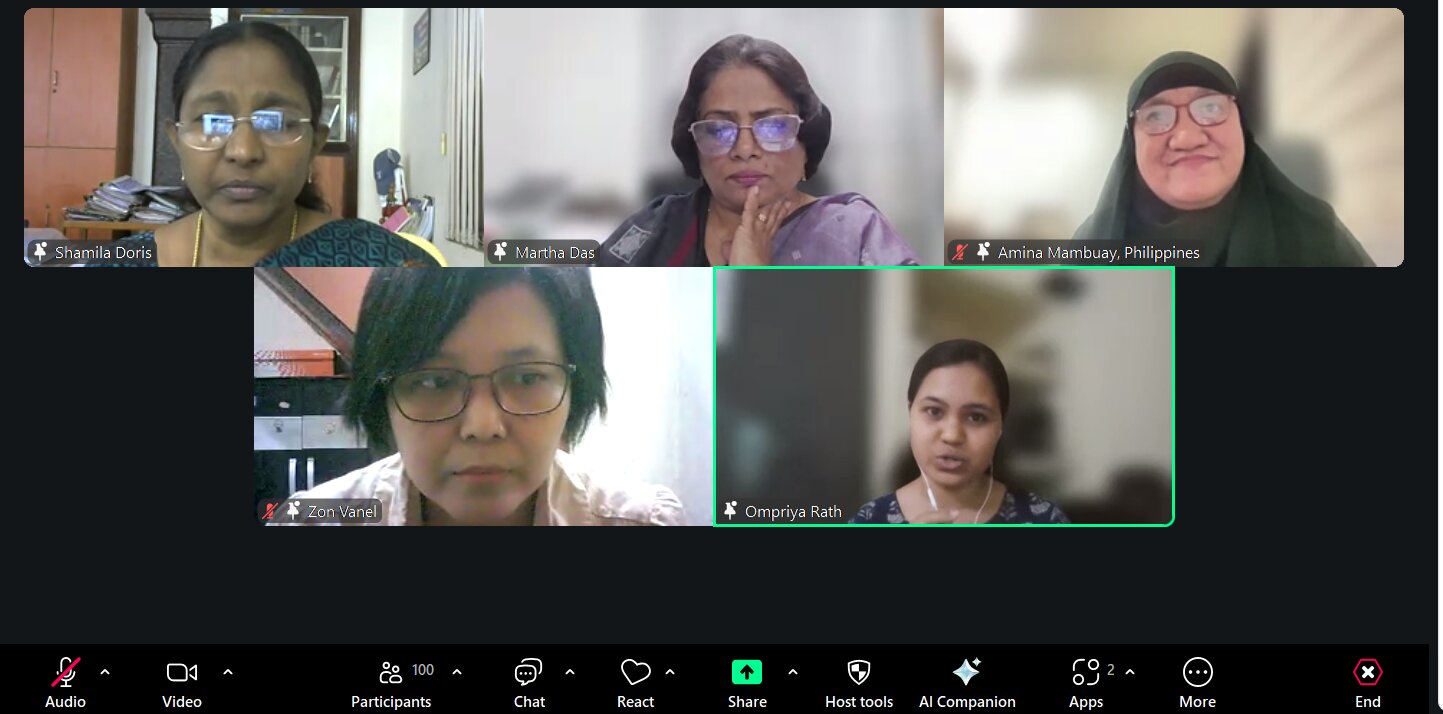
A special panel discussion was held on the theme “Rights, Justice, and Action” viewed through an interfaith lens. The Panel was moderated by Ms. Shamila Doris, General Secretary of YMCA Madurai, India and a member of the gender equity committee- APAY. She introduced four distinguished panelists representing diverse faith traditions: Rev. Marta Das (Christianity, Bangladesh), Ms. Amina T. Mambuay (Islam, Philippines), Ms. Ompria Rath (Hinduism, India), and Ms. Zon Vanel (Buddhism, Indonesia). Structured as a “circle of solidarity,” the dialogue invited each panelist to share personal and faith-based reflections on the theme.
Faith and Justice for Women
The conversation began with Rev. Marta Das, who was asked to reflect on how the theme resonates with her life and spiritual tradition. Speaking as a Christian from Bangladesh, she reflected on the challenges faced by religious minorities and highlighted the biblical call to gender equality. Ms. Amina T. Mambuay emphasized Islam’s deep commitment to justice, underscoring the responsibility of believers to uphold the rights of women and girls. Representing Buddhism, Ms. Zon Vanel connected the theme to compassion, equity, and the collective responsibility to confront injustice while supporting women’s leadership. Together, the panelists affirmed that faith is not only a source of personal conviction but also a powerful catalyst for action, inspiring communities to build a more just and compassionate world for women and girls.
Religious Teachings on Gender Equity
The panel explored how sacred texts and traditions across faiths inspire action for justice and gender equity. Ompriya Rath drew from Hindu philosophy, highlighting the principle of Dharma and the concept of Vasudhiva Kutumbakam—“the world is one family”—as a call to support marginalized communities. Amina T. Mambuay referenced Prophet Muhammad’s teachings on the dignity and rights of women, while Rev. Marta Das shared a biblical story in which Jesus affirmed and dignified a woman’s actions. Concluding the discussion, Zon Vanel reflected on the Buddhist story of Mahapajapati Gotami, underscoring the importance of persistence in advancing gender equality within religious traditions. Together, these perspectives revealed how diverse faith narratives converge to inspire compassion, equity, and transformative action for women’s rights.
Faith Communities and Women’s Rights
The discussion centered on the role of faith communities in advancing women’s rights. Ompriya Rath highlighted Hindu traditions that honor powerful female divine figures and shared a personal story about the transformative energy of feminine worship. Zon Vanel reflected on how faith communities can both support and hinder progress, stressing the need for wise and compassionate interpretations of religious teachings. Rev. Marta Das pointed to opportunities within Christianity for female priesthood and leadership, while Amina T. Mambuay described Muslim community initiatives that confront gender-based violence and economic inequality through education and awareness programs. The session concluded with Ompriya outlining practical approaches within Hindu communities, such as temple-based awareness discussions and intergenerational storytelling, underscoring the importance of faith traditions as both spiritual and social resources for women’s empowerment.
Interfaith Solidarity for Women’s Rights
The panel explored the importance of interfaith solidarity in advancing women’s rights, drawing on perspectives from Christianity, Islam, Buddhism, and Hinduism. Zon Vanel emphasized the shared ethical values across faith traditions that can be harnessed to confront gender-based violence and discrimination. Rev. Marta Das described initiatives by the Evangelical Alliance to combat domestic violence through awareness programs and community engagement. Ompriya Rath highlighted practical interfaith efforts in her community, including collaborative service projects and educational programs. Collectively, the panelists expressed hope in the ongoing struggle for gender justice, pointing to the growing engagement of young people and the openness of faith communities to dialogue. They recommended continuing interfaith webinars focused on education and community action, involving younger generations in decision-making, and creating safe spaces where young women can share their perspectives and take on leadership roles.
Empowering Women: Challenges and Solutions
The session addressed women’s empowerment and the challenges faced across diverse communities. Panelists emphasized the importance of education—beginning within the home—and the need to cultivate respect for women’s rights at every level of society. They also highlighted the creation of safe spaces for women, particularly refugees and survivors of violence, as essential to fostering dignity and resilience. Throughout the discussion, speakers reflected on how faith traditions shape women’s understanding of their worth and inspire action for justice.
Drawing on faith-based perspectives, the dialogue underscored both the supportive and limiting roles of religious communities in advancing gender equity. Practical strategies were emphasized, including tackling gender-based violence, addressing economic inequality, and strengthening interfaith solidarity. The panel concluded with a shared vision: faith communities working together to promote justice, dignity, and inclusion for women and girls, ensuring that empowerment is rooted in both spiritual conviction and social action.
Concluding Remarks
The webinar concluded with a heartfelt vote of thanks delivered by Mr. David Wong from Singapore, acknowledging the contributions of all panelists, officers, moderator, MC and participants. This was followed by an uplifting interfaith prayer for Rights, Justice, and Action, led by Dr. Koshy Alexander Vaidyan from India, which affirmed the shared commitment across traditions to work together for dignity, equity, and peace.