





ICF’s “Peaceful Minds” Workshop Inspires Youth in Kandy


Last Updated (Friday, 05 June 2026 20:06)
ICF’s “Peaceful Minds” Workshop Inspires Youth in Kandy
A three-day workshop on “Peaceful Minds: Empowering Youth for Mental Health and Peace" was successfully held from April 24 to 26, 2026, at Kandy City Mission, organized by the Interfaith Cooperation Forum (ICF) Sri Lanka. A total of 17 young individuals from diverse religious and cultural backgrounds — five Buddhist, eight Muslim, three Hindu, and one Christian participant.
Centered on the theme of cultivating a peaceful mind, the workshop addressed critical topics including psychosocial support, Psychological First Aid (PFA), stress management, and community resilience. Rather than traditional lectures, the sessions were intentionally designed to be interactive and engaging. Participants actively participated in group discussions, teamwork activities, role-plays, drama simulations, and presentations, learning not only from facilitators but also from one another.
The workshop began on the afternoon of April 24 with an introductory session. The focus was firmly on group cohesion, welcoming participants, facilitating introductions, and forming four working teams that would collaborate throughout the three days. Participants were welcomed into the program through icebreaker games that encouraged conversations and mutual understanding across faith traditions. Four working groups were formed to collaborate throughout the workshop, while facilitators guided participants in establishing shared group norms and expectations. Each participant received a customized notebook and name badge, marking the beginning of their shared journey.
The second day featured the workshop’s core learning session, covering four interconnected themes related to peace, mental health, and community resilience.
In the first session, facilitated by Ms. Rishini Dilshani, participants explored the concepts of peace, conflict, and violence, including Galtung’s Triangle of Violence, which examines direct, structural, and cultural violence. The session also introduced the concept of psychosocial wellbeing and examined the long-term psychosocial impact of Sri Lanka’s 30-year civil war and the Easter Sunday attacks. Through discussions, case studies, and creative activities such as drawing peace symbols, participants reflected on how conflict shapes both individuals and communities.
The following session focused on examining common signs of distress, depression, trauma, PTSD, and collective grief in conflict-affected settings. Participants individually listed signs of distress they had personally observed before compiling a shared group analysis. Facilitators employed trauma-informed approaches throughout the discussion, encouraging participants to draw from personal and community experience while normalizing help-seeking behavior.
Highlights of the workshop were the introduction to Psychological First Aid (PFA). Participants learned foundational helping skills such as active listening, empathy, and supportive conversation. During the "Listening Pairs" activity, participants practiced active listening techniques by sharing personal challenges in pairs, followed by guided group reflections. Facilitators modeled empathetic responses and demonstrated the do's and don'ts of helping.
The afternoon session, facilitated by Ms. Hana Khan, focused on the practical application of PFA through the "Look, Listen, Link" framework. Through drama simulations, participants role-played scenarios involving displacement and violence. The session concluded with debriefing and assessment. Participants also explored referral pathways and the importance of maintaining boundaries when helping others.
The final day, facilitated by Ms. Rishini Dilshani, began with a resilience-strategy workshop in which teams brainstormed practical approaches to restoring community hope and social cohesion in conflict-affected settings. Recognizing that peacebuilders themselves need care, this session helped participants understand the signs of burnout, compassion fatigue, and vicarious traumatization. Each participant completed a personal self-assessment before drafting an individualized self-care plan covering physical, emotional, and social wellbeing. The energizing "Shake it Off" activity brought movement and laughter to the room, reinforcing the message that self-care is a professional responsibility, not a luxury.
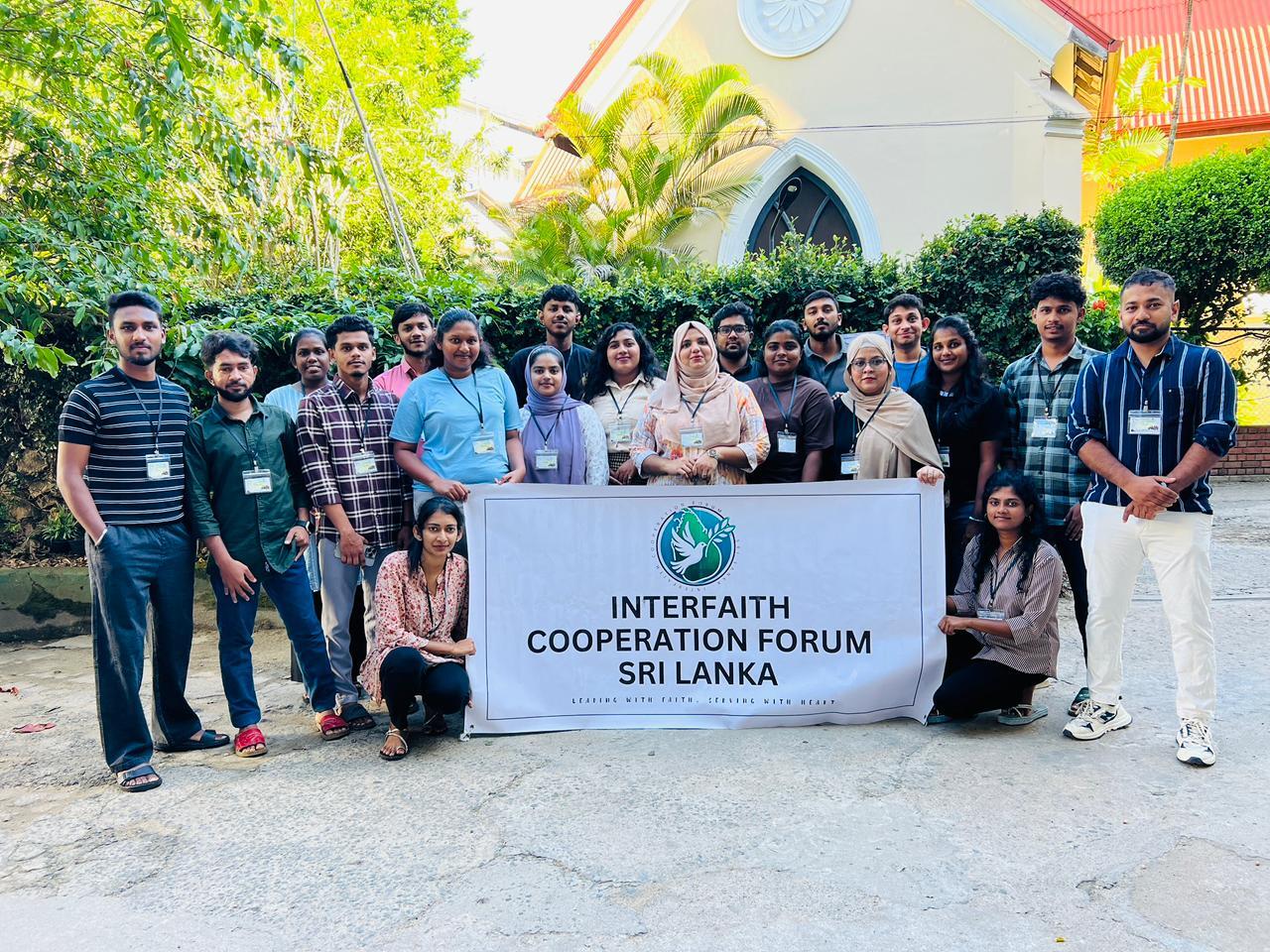
As the workshop came to a close, participants celebrated their shared journey through dance performances, drama presentations, and reflections. The closing ceremony captured both the joy of shared memories and the bittersweetness of parting ways. Certificates were awarded to each participant in recognition of their active involvement and commitment throughout the workshop. A group photo brought the three days to a warm and memorable conclusion.
Beyond the learning sessions, the workshop also prioritized connection and joy. Energizer games, group outings, and a lively evening DJ session added energy and excitement to the days, helping participants relax and bond with one another. The organizers provided free accommodation and meals throughout, ensuring that every participant could fully focus on the experience without distraction.
The workshop created an environment where young people felt safe expressing themselves, building confidence, and developing communication skills. Many participants stepped out of their comfort zones by presenting individually and as teams, sharing their thoughts on mental health and peacebuilding with peers from different faith traditions. These experiences encouraged personal growth and strengthened their ability to work collaboratively across religious and cultural divides.
Overall, the “Peaceful Minds” workshop stood as a powerful reminder of the role young people play in building a more peaceful and understanding society. Bringing together Buddhist, Muslim, Hindu, and Christian youth in a spirit of shared learning, the workshop modeled the very interfaith cooperation that it sought to nurture.
Through initiatives like this, the Interfaith Cooperation Forum Sri Lanka continues to contribute to a wider international movement dedicated to promoting harmony, empathy, and unity among communities.
Mohamed Jabeer Wizaam Ahamed
Workshop participant, Sri Lanka